June 5, 20266 min read
Why do customers keep shopping you on price?
Thom Van Dycke · Van Dycke Strategic Business Architecture
Why do customers keep shopping you on price?
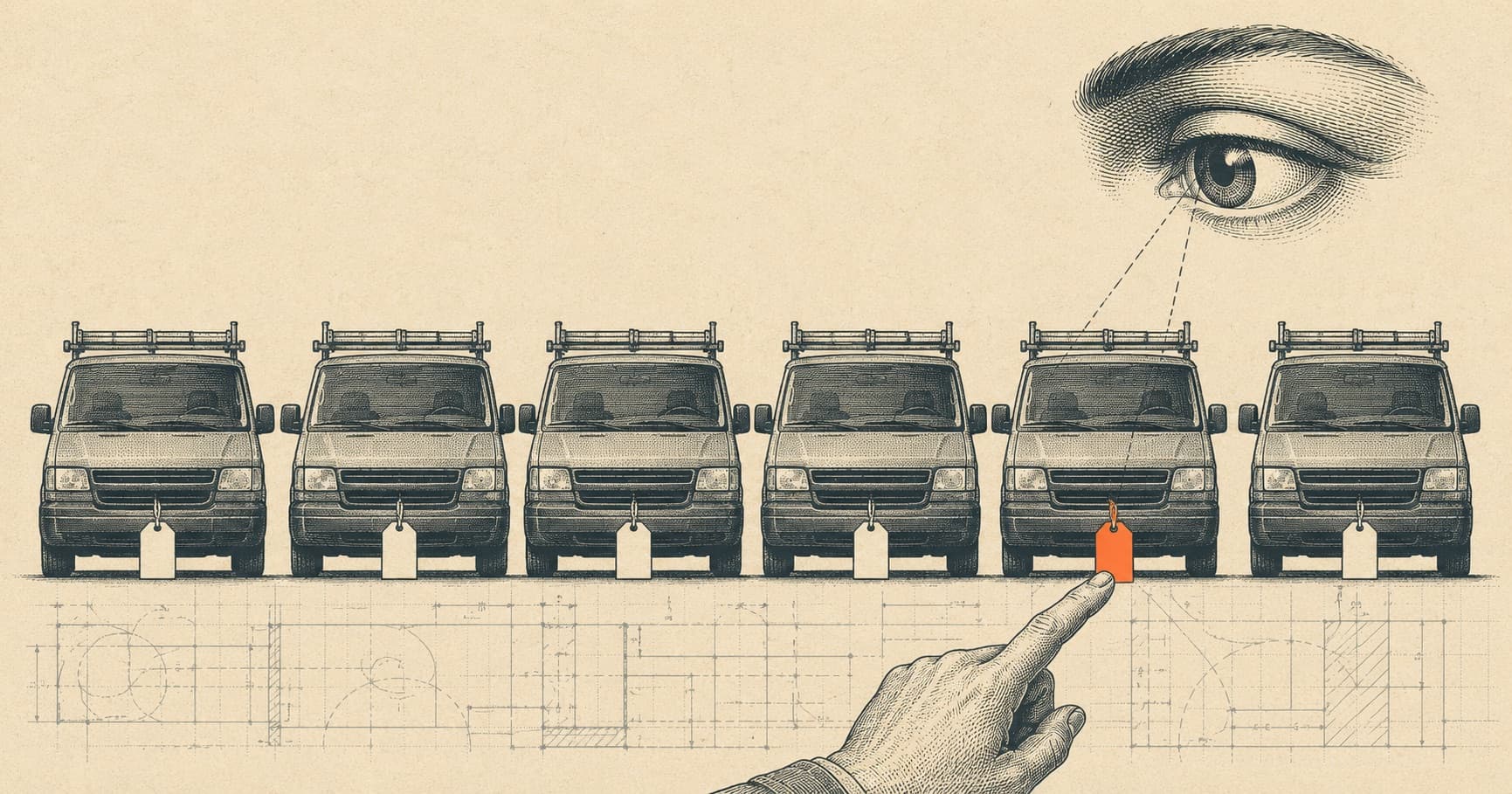
Because you taught them to. If a homeowner can line your bid up against two others and the only difference they can see is the number at the bottom, then price is the only thing you handed them to judge. That is a positioning failure, and it happens long before the quote ever goes out.
Every advisor right now tells you to charge more. They're right at the close and wrong about the problem.
Open your feed and the trades world is converging on one message this month. The loudest voices in contractor coaching are all saying a version of the same thing: charge more, hold the line, stop apologizing for the number, run the math on what your time is worth. The advice is good. Hold the line. Run the math. Your bank account really is a kind of report card.
Here is the part that advice leaves out. Charging more is the move you make after positioning is fixed. Tell a contractor to hold his price without fixing why he keeps getting shopped, and you have told him to stop sweating without mentioning the fever. Discipline at the close treats a problem that started in the opening message. The thing worth holding is the position. The price follows from it.
What's actually happening when you lose the bid to the cheap guy?
You walk the job. You know your work is good. You quote it honestly. A week later the homeowner goes with someone two thousand dollars cheaper, and you tell yourself they just wanted the deal.
Sometimes that's true. Most of the time it isn't. Spend any time in the forums where contractors talk shop and you'll watch them circle the real answer. Someone posts a quote they're second-guessing, and the most common reply runs like this: your quote was fine, they got sticker shock, they'll find someone cheaper and then they'll be back. That reply is the whole essay. The homeowner didn't reject your price. They couldn't tell the difference between you and the cheaper guy, so they used the only measuring stick they had, which was the number.
When two estimates look identical on every axis a buyer can read, the buyer is forced to decide on price. The loss came from sameness. You blended in with the other bids, so the number became the tiebreaker. Price is what a customer reaches for when nobody gave them another reason to choose.
How positioning makes price almost irrelevant
Positioning is the answer to a question the homeowner is asking silently on the first call: why this person and not the other three? It's the decision about who you're built for and why you're the obvious choice for them. Your logo and your tagline are decoration on top of that decision, not the decision itself. If your consult never answers the question, clearly enough that the homeowner could repeat it to their spouse that night, then you were never positioned. You were listed. And a list sorts itself by price.
The architecture underneath a business that doesn't get shopped is simple to name and hard to build: a specific customer you're built for, a specific problem you're known for solving, and one clear reason you're the right call for that person. Get those three right and price stops being the conversation. The homeowner still cares about money. Now they can also see what they'd give up by going cheaper. The cheaper bid stops looking like the same work for less money and starts looking like a different, riskier job.
That's the move the charge-more advice skips. It hands you permission to raise the number without building the structure that makes the number make sense. The price goes up, the bids keep losing, and the contractor concludes the market won't bear it. The market will bear it. The market just couldn't see why it should.
Try this: the two-sentence position test
Before your next estimate, answer one question in two sentences. What does this homeowner get from me that they can't get from the cheapest bidder in town, and could they repeat it back in their own words?
If your answer is better quality, or licensed and insured, or twenty years of experience, you failed the test. Every competitor on that quote stack says exactly the same thing, so none of it tells the homeowner anything. Those are table stakes, not a position.
A real answer is specific enough to exclude people. We're the crew homeowners call when the last contractor vanished mid-job and they need someone who actually finishes. We only do full-system replacements, so we're not learning on your house. Specific enough that some homeowners read it and rule themselves out, which is the point. A position that tries to win everyone ends up competing on price. The one that's willing to turn away the wrong customer is what finally stops the right one from shopping you.
Run that test on your last three lost bids. Most of the time the loss didn't happen at the number. It happened in the first ten minutes of the consult, when you sounded like everyone else.
What this looks like once it's fixed
The contractor who fixes positioning doesn't suddenly close every bid. He closes the right ones and stops chasing the wrong ones into a price war he was never going to win. The math advisors are correct that your prices probably need to come up. Raise the number on top of a clear position and it reads as confidence. Raise it on top of a message that sounds like every other truck in town, and the homeowner just hears a reason to call the next guy.
Most contractors who think they have a pricing problem are losing on sameness. Fix the architecture of the message first, and the price takes care of itself.
Frequently asked
Is lowering my price ever the right call to win work?
Occasionally, in a real downturn or to keep a crew busy through a slow stretch. But if discounting is your default answer to losing bids, you're managing a positioning problem with a pricing lever, and that works right up until it bankrupts you. Cutting price to win look-alike bids trains your whole market to see you as the cheap option.
How is positioning different from branding?
Branding is how you look and sound. Positioning is the strategic decision about who you're for and why you're the only logical choice for them. You can have a beautiful brand and no position, which describes most contractor websites. Positioning is a decision you make, not a design you buy.
How do I know whether my problem is pricing or positioning?
Look at why you lose. If you lose bids to cheaper competitors who do roughly what you do, that's positioning, because the buyer couldn't tell you apart. If you win plenty of work but the margins don't survive, that's genuinely pricing. Most contractors who think they have a pricing problem are losing on sameness.
Can't I just out-sell it with better closing skills?
Better closing helps at the margin, but a great close on a weak position is exhausting, because you're convincing every single buyer one at a time. Positioning does that convincing before the conversation starts. Closing skill should be the last few percent of the work, not the whole engine.
Ready for some serious action?
It starts with a quick 20-minute call to come up with a plan.
Get the next one in your inbox
Occasional field notes on positioning, marketing, and building a founder-led business worth running. No spam, and you can unsubscribe anytime.