
June 26, 20268 min read
Why don't your best jobs come from the leads you pay for?
Thom Van Dycke · Van Dycke Strategic Business Architecture
The leads you pay for are a numbers game. You buy a stranger's half-attention, race to be the first to call, and most of it goes nowhere. Your biggest, best, most profitable jobs almost always trace back to someone who already trusted you and passed along a name. That warm introduction does the selling before you ever show up. The real work is growing more of those on purpose.
Why does buying leads feel so right and still leave you cold?
I have a friend who is a genuinely great salesperson, and he swears by cold leads. I look at it and I just shake my head.
It's always a volume play. Hit enough strangers and, statistically, a few will say yes. It even has the appearance of working over time, which is exactly what makes it so sticky. You can point at the one deal that closed and tell yourself the system works.
But it feels unhuman to me. There's no relationship in any of it. It's speed dating. You sit across from someone for five minutes in a loud bar, trying to learn just enough about them to earn a second date, and then you do it again, and again, all night. That might be a way to fill a calendar. It's a strange way to build a business.
And the spam. I hate spam. I think it's a drain on everyone's time and attention. When you load a pitch into an automation and blast it at a list, you aren't honouring the customer. You aren't even honouring people.
One more thing worth noticing: who's actually selling you the cold-lead idea? The person who sells cold leads will always tell you cold leads are the answer. The person who sells SEO will always tell you SEO is the answer, even when you're in an industry that can't really use it. Everyone's prescription is suspiciously close to their own inventory. The honest answer depends on your particular business and your particular industry, which is the one thing a vendor selling a single product can't afford to tell you.
You don't have a lead problem. You have an architecture problem wearing a lead-generation costume.
What actually makes a referral different?
Trust arrives before you do.
When a past client sends you their neighbour, a few things are already true that a bought lead can never give you. They believe you can do the work, because someone they trust said so. They expect to pay a fair price, because they were sold on quality, not the cheapest bid. And they're loyal before the first conversation even starts.
This isn't a hunch. Nielsen's global research found that 88% of people trust recommendations from people they know more than any other kind of advertising (Nielsen, 2021). And the advantage lasts. A peer-reviewed study in the Journal of Marketing followed roughly 10,000 customers over six years and found referred customers were worth more over their lifetime and far less likely to leave. That loyalty gap didn't fade (Schmitt, Skiera & Van den Bulte, 2011).
I see it in real numbers all the time. I work with a law firm, and when we broke down every marketing channel they had running, the channel producing the most leads by a wide margin was referrals. Not a slick professional referral network either. Just past clients and family members sending people their way. They also run ads on radio, TV, and Meta, and those matter, but those are for awareness. Nothing in the whole mix performs like a warm referral.
It's true of my own business too, and I'll be honest about it even though I publish content for a living: the vast majority of my clients don't come from a blog post or a LinkedIn update. They come from an introduction by someone I have a real, trusted relationship with. That should tell you something about where the weight actually sits.
There's a second reason this matters. Referrals are one of the cleanest ways to raise the lifetime value of a client. Repeat work and referrals both come from the same root, which is a relationship you kept warm. If you know that referrals lift lifetime value, it would be a little foolish not to treat them like the asset they are.
So is a "referral engine" just another machine?
People talk about building a "referral engine." I slip into that language myself. But engine sounds mechanical, and mechanical is the opposite of what makes any of this work.
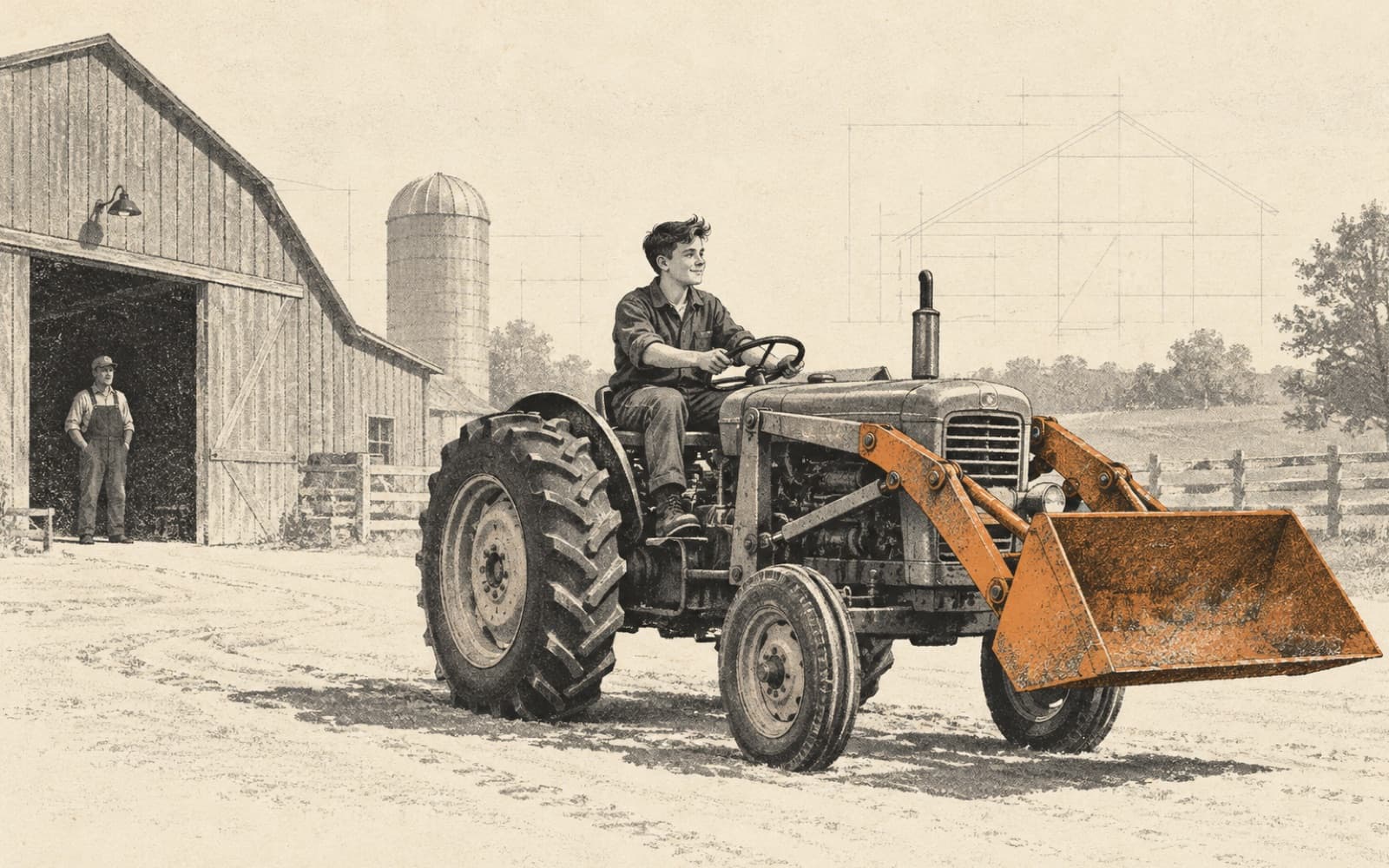
I grew up on a farm, so I think about it as farming.
A farm operation is a lot of patient, unglamorous work that happens long before harvest. You seed. You deal with the weeds. You feed the soil in the off years, when nothing is growing, so that when the seed finally goes in there's something nutritious for it to start on. And you do all of it knowing some of the biggest factors, like the weather, are entirely out of your hands. Marketing built on relationships works the same way. It's a system, but a living one. You tend the field. Some relationships become clients. Some become the people who send you clients. Most of the value shows up in a season you can't fully schedule.
That framing changes how the work feels. A machine you switch on and optimize. A field you tend and respect. One treats people like throughput. The other treats them like people, which, conveniently, is also what works.
How to tend the field this week
You don't fix a thin pipeline by quitting paid leads tomorrow and praying. You grow the warmer thing on purpose, then lean on it more as it takes. Three places to start, simple to involved.
Block the time. Put a recurring slot on your calendar to reach out to the people you have a referral relationship with. If it isn't scheduled, it won't happen, because it never feels urgent until the pipeline is already dry. This is the seeding. Boring, repeatable, and the whole thing depends on it.
Stay in the soil between harvests. Once a quarter, take an introduction partner to lunch or coffee with no agenda beyond the relationship. You're feeding the ground in the off season so there's something to grow in later. The people who only call when they need work are easy to spot, and easy to ignore.
Make the ask human and specific. Once a month, tell a few trusted people something real: "Here's the kind of client I just worked with. They had this exact problem, it's going really well, and if you know anyone in your network wrestling with the same thing, I'd love an introduction." Specific beats vague every time. "Send anyone my way" gives a person nothing to act on. A clear picture of who you help gives them a name.
Pick one and run it for a full season before you judge it. Referrals compound, which means the work looks slow right up until it looks inevitable.
Does this mean ads and marketing are a waste?
No. The law firm still runs its ads, and they earn their keep. Awareness warms the ground so the seed has a chance. The mistake is confusing the billboard with the harvest, and pouring the whole budget into renting attention you stop owning the moment you stop paying.
Spend where the trust accrues to you. A bought-lead subscription evaporates the day the card declines. A field you've tended for years keeps producing. One is a cost you carry forever. The other is something you own.
The owners who quit leaning on bought leads and grew didn't stop marketing. They stopped renting strangers and started farming relationships.
Sources
- Nielsen: Trust in Advertising (2021)
- Schmitt, Skiera & Van den Bulte: "Referral Programs and Customer Value," Journal of Marketing (2011)
- The Four Frameworks: Marketing and Lifetime Value
Frequently asked
Are bought leads ever worth it?
Sometimes, early, to put something in a genuinely empty pipeline while you grow the warmer channel. The mistake is treating bought leads as the strategy instead of a bridge. If you're still renting the same shared leads three years in, you funded a treadmill instead of a field. Use them to buy time, then build the thing that makes them unnecessary.
How long does the referral approach take to work?
Longer than a lead package, and longer than you'd like. It moves in seasons, not weeks. Most owners quit during the off season, right before anything would have come up. Give any one habit a full quarter or two before you judge it, and watch the trend across seasons rather than any single month.
Isn't word of mouth just luck?
The referral can feel like luck. The system that produces it on purpose is not. When you stay in real relationship, ask in a specific way, and do work worth talking about, "luck" starts showing up on something closer to a schedule. The people who call it luck are usually the ones who never tended the field.
What if I'm barely getting referrals at all?
Then start with the honest question: is the work itself worth referring? Do you stand behind it, come back when something's off, communicate well? If a client wouldn't gladly put their own name on the line to recommend you, fix that first. A referral approach moves trust you've already earned. It can't manufacture trust that isn't there yet.
Ready to look at the architecture honestly?
If your best work keeps coming from relationships you can't quite explain or repeat, the job is to make that a system you tend instead of luck you wait on. That's the architecture we build with founder-led businesses.
Book the conversation. We'll tell you what we see, and whether the work we do fits where you are.
Ready for some serious action?
It starts with a quick 20-minute call to come up with a plan.
Get the next one in your inbox
Occasional field notes on positioning, marketing, and building a founder-led business worth running. No spam, and you can unsubscribe anytime.