June 26, 20268 min read
Should you use AI instead of hiring an accountant or consultant?
Thom Van Dycke · Van Dycke Strategic Business Architecture
Use AI freely for the work it does well, and keep a human on the decisions where being confidently wrong is expensive. AI is a strong thought partner and a tireless workhorse. It's also fluent, sure of itself, and sometimes flatly wrong, with no way to tell the difference. So lean on it for research, drafts, and the grind, and pay a person for judgment, accountability, and the calls that touch your money, your legal exposure, or the people you serve.
Why is everyone suddenly asking this?
Because the gap between what AI can do and what most owners are using it for has gotten strange.
I'm an early adopter, and I think what I can do with these tools is amazing. I lean on them all day. That's exactly why a string of recent outages on my main platform rattled me more than I expected. It wasn't just annoying. It was worrying, because it showed me how much of my actual workday is now wired into one system.
Last week I read two notes from AI power users who said they don't even open their task manager or their email anymore. They open the AI, and it runs the rest. There's a widening gap between people working like that and the vast majority of business owners who aren't anywhere close. We're walking into a stretch where you'll be able to talk to a model and have it handle a real chunk of the back office while you go do the work only you can do.
That's the upside, and it's big. But if everything you run is tied to it, including your finances, your legal exposure, and your advice, we're still very early to be handing over that much trust. Both things are true at once, and pretending either one away is how owners get hurt.
What is AI genuinely good for?
A lot, and it's worth being honest about that instead of precious.
My own use has moved in three steps. At first I treated it like a content writer. Then it became a thought partner, something I talk decisions through with, that helps me see angles I'd have missed, as long as I ask in a way that doesn't just hand me back the answer I already wanted. That last part is the whole skill. A model is happy to agree with you. If you prompt it for reassurance, reassurance is what you'll get, and you'll mistake it for counsel. Now it's also a workhorse, grinding through administrative work in the background and saving me a tremendous amount of time.
None of that is the part of an advisor you were ever really paying for. Research, first drafts, explaining options, summarizing a rule at two in the morning: that work is close to free now, and if your business sold mostly that, you've got a real problem coming. Use the tool for it. Refusing to is its own kind of foolishness.
The interesting question starts after the answer lands.
Where does trusting it actually burn you?
On the decisions where it's confidently wrong and you can't tell, because the writing is just as smooth either way.
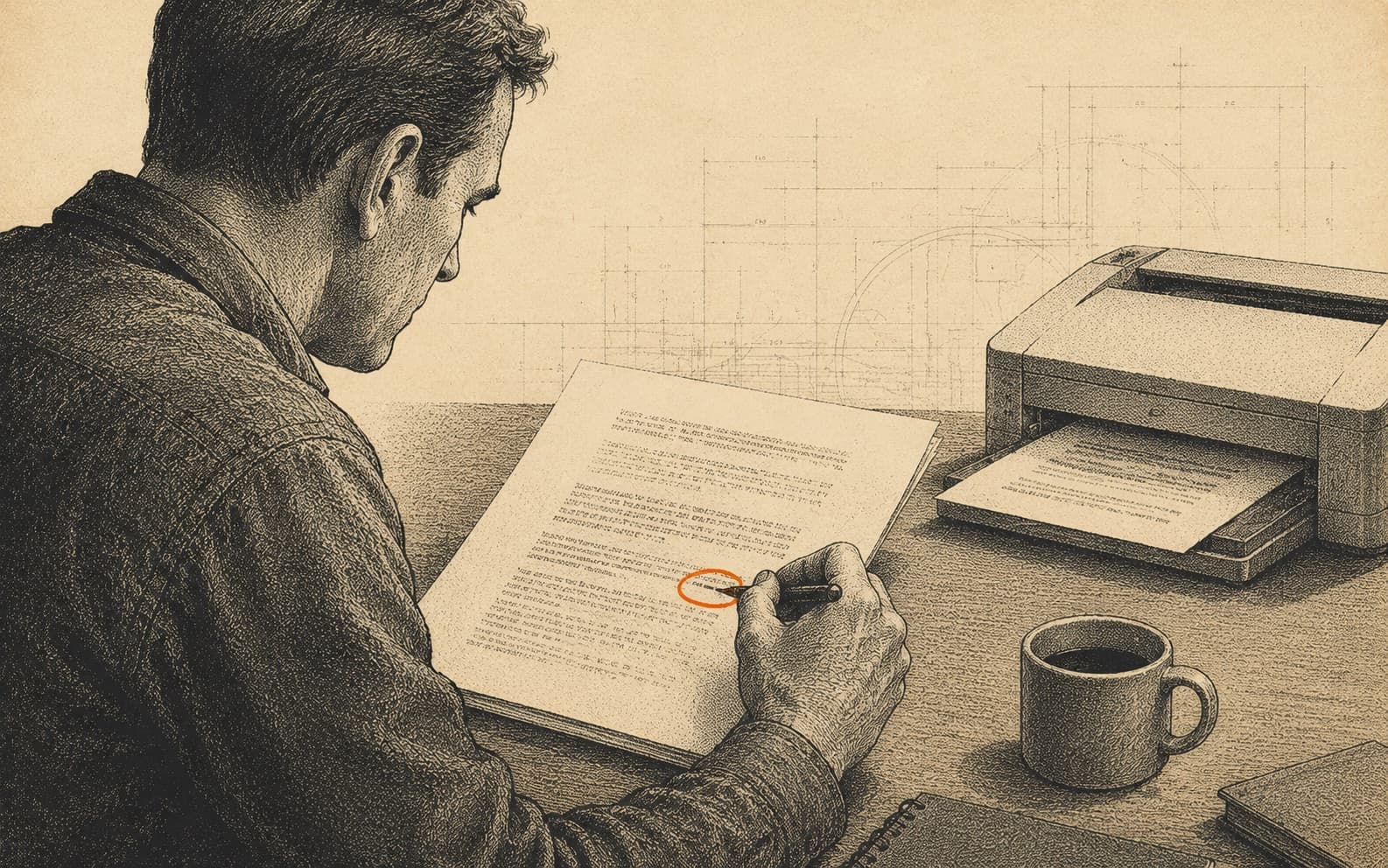
Let me give you a real one, from the making of this very article. I asked my AI to draft this piece. It handed me something clean, well-structured, and wrong. It wrote a tidy line claiming AI can't really give judgment or advice, which is false. I use it for judgment and advice constantly. I caught it, told it so, and asked for a rework. It handed me a second version that was clunky in a different way, and I caught that too. The model never knew either draft was off. It had no alarm bell. The thing that made the final piece right wasn't the AI. It was a human reading it and refusing the confident answer he'd been handed.
That's the entire point in one story. AI was a genuinely useful workhorse and a decent thought partner, and it was also sure of itself while being wrong, with nothing at stake if I'd shipped the mistake. A model doesn't get the call from the tax authority. You do. It doesn't lose the client. You do. Judgment isn't knowing the answer. It's knowing when the confident answer in front of you is wrong, and owning what happens next.
This research backs the same split. The World Economic Forum's 2025 jobs report describes AI taking the repeatable, data-heavy work while humans hold the judgment, the relationships, and the trade-offs, the places where context, accountability, and trust matter (World Economic Forum, 2025). The model drafts. The person decides.
What should stay human, even when the AI is good?
The work where being right matters most, and the work where a person deserves to be honoured.
Two areas I'd treat with real caution right now. Anything financial, and anything legal. The cost of a confident error there is high, and the right call usually depends on specifics the model can't see in your situation. Get its help mapping the options, then put the decision in front of someone accountable.
And then there's customer service, which is racing toward automation faster than anything. That one genuinely bothers me. Customer service is where you get to honour the person who chose to give you their money. It's a place to serve someone well, and we're handing it to a bot to save a few minutes. Maybe the bot can give great service. I'm honestly not sure. But the instinct to strip the human out of the exact moment a human feels most cared for is worth resisting, or at least deciding on purpose instead of by default.
A rule for what to ask the model and what to keep human
You don't have to pick a side. You need a rule for which decision goes where. Run anything through these three questions.
How expensive is being confidently wrong? Low cost, reversible, generic? Ask the model and move on. High cost, hard to undo, touching money, law, or a key relationship? That's a human call, and you want someone accountable on it. Match the tool to the stakes, not to convenience.
Am I asking it to think, or to agree with me? If you prompt for reassurance, you'll get it, and you'll trust it more than you should. Ask it to argue the other side, to tell you where your plan breaks, to give you the version you don't want to hear. A thought partner that only nods is just a mirror.
Who's accountable when this is wrong? If the honest answer is "the chatbot," you don't have an advisor, you have a confident stranger. For the calls that can hurt you, pay for a person whose name is on the outcome. For everything else, the tool is a gift. Use it without guilt.
So should you use AI instead of an advisor?
Use it instead of the part of an advisor that was only ever information. Keep the person for judgment, accountability, and the relationships that deserve a human. The owner who runs AI hard on research and admin, and brings a real person in for the high-stakes calls, will spend less and decide better than the one who hands everything to a model, or the one who pays full price for advice they could now get for free.
Stop asking whether AI can replace your advisor. Ask which of your decisions you'd want a real name attached to. Trust the tool with the rest, and honour the people on the other end of the ones that matter.
Sources
- World Economic Forum: The Future of Jobs Report 2025
- The Four Frameworks: how we diagnose what a business is actually for
- About Thom
Frequently asked
Can I use AI instead of hiring an accountant?
For routine questions and first drafts, often yes, and you should. For the decisions where being wrong is expensive and the right call depends on your specific situation, no. AI gives a confident, generic answer and carries none of the consequence. You still want a person who knows your business and is accountable when a filing or a position gets tested.
Is AI a good substitute for a consultant?
It's a good substitute for the part of consulting that was selling information: frameworks, summaries, generic best practice. It's a poor substitute for a person who diagnoses your actual situation, tells you the thing you don't want to hear, and stands behind the recommendation. Treat it as a sharp thought partner, not a decision-maker, and you'll get the best of it.
How do I get good judgment out of AI instead of just agreement?
Stop asking it to confirm what you already believe. Prompt it to argue against your plan, to name where it falls apart, to give you the case you're avoiding. Models are agreeable by default, so reassurance is the easiest thing to pull out of one. The useful answers come when you make it push back.
What should I never hand fully to AI right now?
Anything where a confident mistake is costly and hard to reverse: financial decisions, legal positions, and the human moments like customer service where a person deserves to be cared for, not processed. Use AI to prepare and to think. Keep a human accountable for the call and present for the relationship.
Ready to look at the architecture honestly?
If you can't yet name which half of your work is information a model now gives away and which half is the judgment only you can stand behind, that's the work, and it matters more now than it did a year ago. That's the architecture we build with founder-led businesses.
Book the conversation. We'll tell you what we see, and whether the work we do fits where you are.
Ready for some serious action?
It starts with a quick 20-minute call to come up with a plan.
Get the next one in your inbox
Occasional field notes on positioning, marketing, and building a founder-led business worth running. No spam, and you can unsubscribe anytime.