
June 12, 20268 min read
Why can't you find and keep good people?
Thom Van Dycke · Van Dycke Strategic Business Architecture
Often because there's no defined seat for them to sit in. The labor market is tight, and that part is real. But in a founder-built business, the role, the decisions it owns, and the system it plugs into usually live in the founder's head. Good people don't avoid hard work. They avoid businesses with no place to stand.
Is it really a labor shortage?
Talk to enough owners and you'll hear the same line, usually said half exhausted and half relieved: nobody wants to work anymore. Someone has lost their third hire in a year, and if the market is broken then the problem is out there and not in here.
I get it. I've caught myself reaching for versions of it too. It's a comfortable sentence. It explains the pain and asks nothing of you.
And the market is tight, no question. In NFIB's mid-2026 data, more than eight in ten small business owners who were hiring reported few or no qualified applicants for the roles they were trying to fill. That's not nothing. If you're competing for a licensed tradesperson or a senior account manager, the math is harder than it was ten years ago. I'm not going to pretend otherwise.
But notice what that sentence does once it settles in. "I can't find good people" quietly becomes the whole diagnosis. The search ends there. And it's not just the trades saying it. I hear the identical line from agency owners who can't keep a project manager and from accounting-firm partners who burn through associates. Different industries, same shrug. When a problem shows up in that many places at once, the labor market usually isn't the only thing going on.
What does a good person actually walk into?
Picture the strong hire you want. Capable, motivated, a little ambitious. They take the job. Day one, what do they walk into?
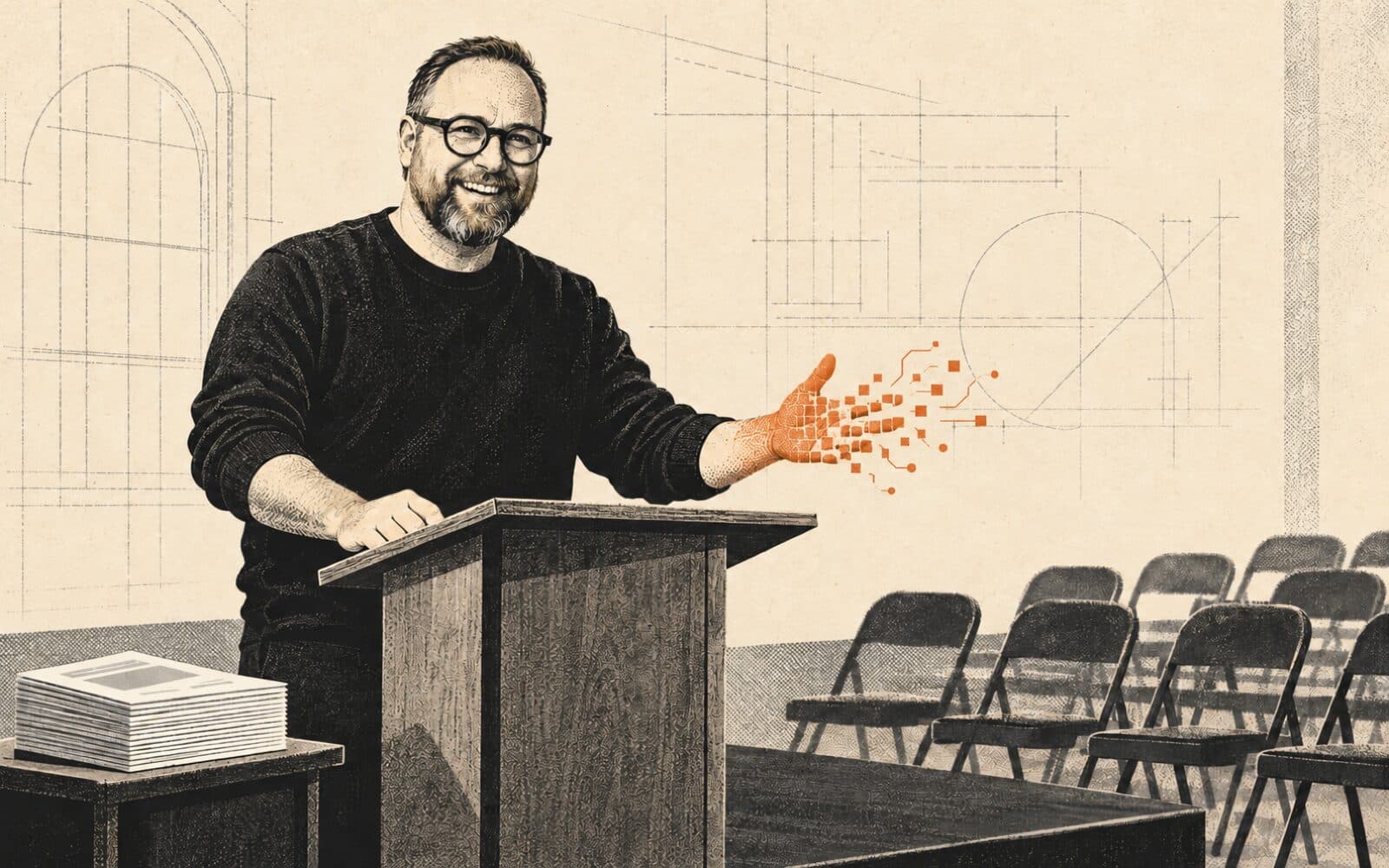
In a lot of founder-led businesses, the honest answer is: a chair, a login, and you. The role was never written down past a job title. The decisions it's supposed to own are still yours, because you've always made them and never stopped. There's no system underneath the seat, just the founder's instincts, which work beautifully right up until someone else has to follow them.
Gallup has been measuring this for years, and the number is bleak. Fewer than half of employees strongly agree that they know what's expected of them at work. Fewer than half. And the people who do have that clarity are close to four times as likely to be engaged. So before we talk about whether the labor pool is thin, it's worth sitting with the possibility that even our current people aren't sure what their job actually is.
This is the architecture problem again, just in a corner founders rarely look. The same business that was built around the founder's energy has roles built around the founder's energy. The seat exists to assist you. It was never designed to hold a person who could run something on their own. A strong hire feels that within a few weeks. They came to own something. You handed them errands.
Picture a small professional-services firm that hires a strong senior person and watches them check out within two months. Walk through it and the pattern shows up fast. There was no part of the business that person was allowed to own without the founder signing off. The new hire could lead. There was simply nothing there to lead. The seat held a title and no real authority, so a capable person quietly gave up on it.
Why do the good ones leave?
This next part stings, so I'll just say it. When a good hire quits a small business, the manager is usually the biggest reason, and in a founder-led business the manager is you.
Gallup's research across millions of workers found that managers account for roughly 70 percent of the variance in team engagement. Not pay. Not perks. Not "this generation." The single largest factor in whether your people lean in or drift out is the person they report to. In your business, that's the founder who's never had time to learn how to hand work off, because handing work off was never built into how the place runs.
So the cycle goes like this. You're slammed, so you hire. You're too slammed to onboard, so the new person guesses. They guess wrong, because the right answers were in your head, so you take the work back. They feel useless, because they are being used uselessly. They leave. And the story you tell yourself is "I can't find good people," which sends you right back to the top of the loop to do it again.
Nobody wants to work anymore? Maybe. Or maybe nobody wants to be the spare set of hands for a business that never decided what the hands were for.
What does "I can't find good people" usually mean?
It usually means the business has no place to put one yet.
That's a harder truth than the labor-shortage story, and it's harder on purpose, because it's the one you can actually do something about. You can't fix the national labor market this quarter. You can define a real role this quarter. You can decide what one seat owns, what "good" looks like in it, and what system it plugs into so a competent stranger could succeed without living in your head. Defining the seat is the first half of the decision. The second is what it costs, which you can work out before you post the job with the hire affordability calculator.
This is the same move as positioning, pointed inward. Positioning is deciding who the business is for and why someone picks you. Role design is deciding who a seat is for and what it's responsible for. Both are architecture. Both are usually missing in a founder-led business for the exact same reason: it all worked when it was just you, so nobody ever wrote it down.
The coaching world, predictably, sells the other answer. Hire harder. Recruit smarter. Run this interview script, post in these places, use this nine-step system and the talent appears. Some of that advice is even fine. But it's the same move as every formula we push back on: a tactic sold as a system, bolted onto a foundation that can't hold it. You can run the world's best hiring process and still lose the person in ninety days if there's no real job waiting for them. There is no proven recruiting system that substitutes for having built a seat worth sitting in.
I'll admit my bias here. I spent two decades leading people before I ever wrote a positioning statement, and the thing I learned over and over is that people rarely leave because the work is hard. They leave because the work is unclear, unowned, and ultimately pointless to them. Clarity is a kindness. It's also, it turns out, a retention strategy.
Define one real seat this week
Don't redesign the whole org. Pick the one role you most need to stop doing yourself, and give it an actual shape.
Write three things down, on one page:
First, the outcome this seat owns. Not tasks. An outcome you'd be comfortable being judged on. "Every job is scheduled and staffed two weeks out" beats "help with scheduling."
Second, the decisions this person makes without you. Be specific, and make it real. If the honest answer is "none," you've found why the last good hire left, and you've found your homework.
Third, what "good" looks like in ninety days. If a capable stranger read your page, could they tell whether they were winning or losing without asking you? If not, keep editing until they could.
Then go look at your current people through that same page. Some of your "I can't find good people" problem is sitting in a seat you never defined, quietly waiting to be told what winning means.
Sources
- NFIB Small Business Jobs Report, hiring and qualified-applicant data, mid-2026
- Gallup on employee engagement and clarity of expectations at work
- Gallup: managers account for 70% of the variance in team engagement
Frequently asked
Is the labor shortage real or just an excuse?
Both can be true. NFIB data shows most small business owners trying to hire see few or no qualified applicants, so the tight market is real. The trap is letting that be the entire diagnosis. A real shortage and an undefined role usually show up together, and only one of them is yours to fix this quarter.
Why do good employees keep leaving my small business?
Most often because of the manager, and in a founder-led business that's the founder. Gallup ties roughly 70% of engagement to the manager. When a role has no clear outcome, no decisions it owns, and no system underneath it, even a strong hire disengages fast. The seat, not the person, is usually the issue.
How do I know if it's a hiring problem or a business problem?
Ask whether a capable stranger could step into the role and tell if they're winning without checking with you. If the job only works when you're explaining it in real time, the structure isn't built yet. That's an architecture problem showing up as a hiring problem, and adding another candidate won't solve it.
What should I fix before I post another job opening?
Define one seat properly: the outcome it owns, the decisions it makes without you, and what "good" looks like in ninety days. That single page does more for retention than any recruiting tactic, because it gives a strong hire something real to stand on and a way to know they're succeeding.
Does this apply outside the trades?
Yes. The pattern shows up in agencies, accounting firms, coaching practices, and professional-services firms just as often. Any business built around a founder's energy tends to have roles built around that energy too. The industry changes. The missing architecture underneath the role doesn't.
Ready to look at the architecture honestly?
If you've cycled through three hires and you're staring at the job board again, the candidates probably aren't the problem. The seat you're asking them to fill might not exist yet. That's fixable, and naming it precisely is where we start.
Book the conversation. We'll tell you what we see, and whether the work we do fits where you are.
Ready for some serious action?
It starts with a quick 20-minute call to come up with a plan.
Get the next one in your inbox
Occasional field notes on positioning, marketing, and building a founder-led business worth running. No spam, and you can unsubscribe anytime.